
With just a few months to go before their World Cup debut, the United States men’s national team presents a dual profile: on one hand, a generation that has finally established a credible European-based core; on the other, a lingering sense of incompleteness that still surrounds Mauricio Pochettino’s squad.
The head coach has treated recent international windows as genuine World Cup rehearsals, and that is no small detail: the FIFA ranking places the USA around 15th, while recent friendlies against Belgium and Portugal, followed by tests against Senegal and Germany, are meant to clarify whether the group has truly raised its competitive ceiling.
The tournament opener against Paraguay, on home soil, will immediately reveal the level of pressure tied to hosting a World Cup.
Pochettino has brought structure, but not all the answers
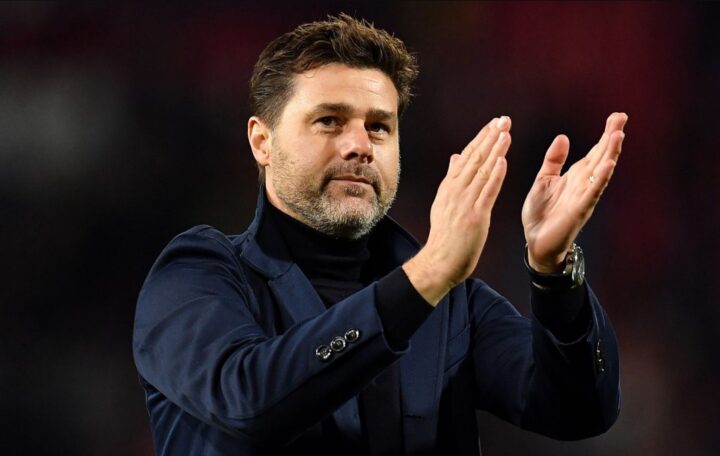
The starting point is clear: Pochettino has introduced a different vocabulary, more European, more demanding, more aligned with the idea that the national team must approach every camp with real competitive intensity. It is no coincidence that he has described this period’s matches as World Cup-level fixtures, a sign that the team can no longer hide behind the excuse of future growth.
The United States closed out 2025 on a positive note, including a convincing win over Uruguay, but the picture is not yet that of a fully formed team. The March roster reflects a squad that is strong in certain areas and still vulnerable in others, especially when it comes to fitness and consistency.
Pulisic remains the face of the team, and the technical burden rests on him
Christian Pulisic continues to be the most reliable indicator of the United States’ attacking health. At AC Milan, he has delivered high-impact performances this season, including a brace against Torino in December, and his overall output in Serie A over the past two and a half years places him among the league’s elite: since his arrival, he has been the only player in Italy’s top flight to surpass both 30 goals and 20 assists.
That statistic speaks louder than any narrative, Pulisic is not just the most recognizable name in the squad, he is also the most dependable creative force. At the same time, recent weeks have shown occasional dips in form, a reminder that the USMNT still relies heavily on his acceleration, his movement between the lines, and his ability to generate danger in the final third.
McKennie provides intensity, Adams remains the big question mark
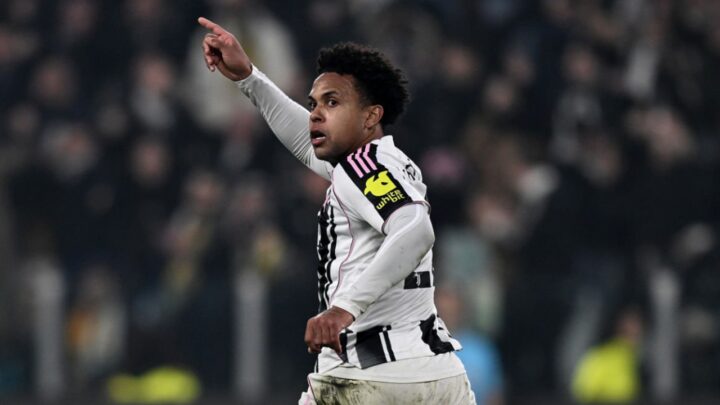
If Pulisic is the headline name, Weston McKennie is the player who gives the team its substance. His season with Juventus has been solid enough to earn him a contract extension through 2030, and the numbers confirm real growth: eight goals in 38 appearances, along with a personal record for scoring in a single season across Europe’s top five leagues. McKennie remains the ideal connector for a national team that needs aggression, late runs into the box, and tactical versatility.
The issue is that the picture alongside him is far less clear. Tyler Adams, in terms of balance and leadership, would be the key figure in midfield, but his knee injury sustained with Bournemouth—and the subsequent absence from the March camp, continues to weigh heavily. Without Adams, the United States lose their best ball-winner, the player who stabilizes transitions and allows attacking players to stay higher up the pitch. This may well be the true dividing line between a team capable of a serious tournament run and one destined to remain in limbo.
Balogun and Pepi are improving, but the defense still raises doubts
Up front, however, the news is more encouraging. Folarin Balogun arrives at a crucial moment in strong form: Monaco named him their Player of the Month for February after scoring four goals, and he has continued his momentum into March.
This is exactly the signal Pochettino was hoping for, a striker in rhythm, more consistent, more present inside the penalty area. Ricardo Pepi also remains a credible option despite suffering a broken arm in January with PSV; his recovery in time to rejoin the squad is a positive development for a department that needs depth and real alternatives.
Defensively, though, several questions remain. Sergiño Dest is sidelined with a muscle injury, and his absence reduces quality and unpredictability on the right flank. Antonee Robinson has returned to the national team setup after a long layoff, bringing back pace, width, and positional awareness on the left.
The central defensive unit, however, still lacks complete reassurance: Chris Richards is a solid foundation, Tim Ream offers experience, but overall the back line does not yet match the solidity of the tournament’s top contenders. In a World Cup, especially for a host nation – it is often defensive stability that separates excitement from disappointment.
Reyna, the inconsistent talent who could raise the team’s level
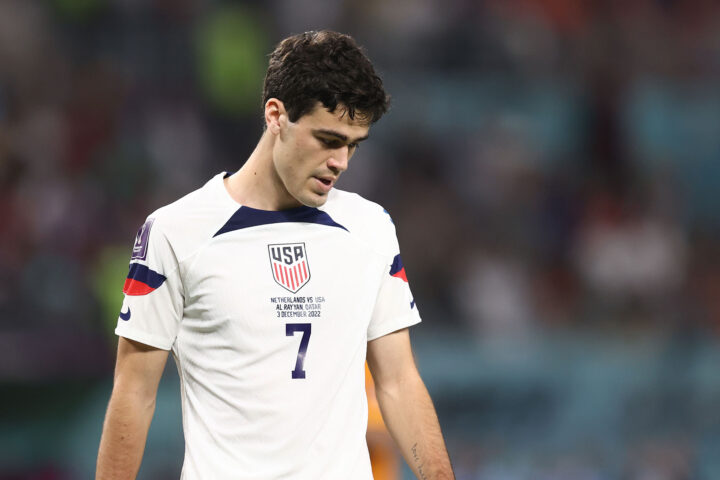
The most delicate technical case remains Gio Reyna. Pochettino continues to view him as useful and potentially decisive, but the issue is not talent; it is consistency. Between limited playing time, uncertain fitness, and a 2026 that has begun with little club involvement, Reyna represents both the most intriguing and the most unstable variable in the squad.
If he arrives at the tournament in good condition and with match rhythm, the United States would gain the only true playmaker capable of naturally operating between the lines alongside Pulisic. If not, the team risks losing a key component of its more fluid, combination-based football.
The real state of health – a lively team, but not yet elite
The overall assessment must avoid extremes. The United States is not a team in crisis, but neither are they a fully developed elite contender. They have credible stars across Europe’s top leagues, a coach with an international pedigree, and enough quality to aim for a respectable tournament, perhaps even more, if their key players remain fit.
Yet they also carry clear vulnerabilities, the injuries to Adams and Dest, the uncertainty surrounding Reyna, the technical dependence on Pulisic, and a defensive line still to be tested against top-tier opposition.
That is why, in the ante-post markets of authorized platforms covering soccer betting, the USA is not listed among the main favorites for the title, but rather among the outsiders, some distance behind the leading European and South American powers. For now, that evaluation appears accurate: an interesting team, at times even exciting, but still required to prove it can truly handle the weight of a home World Cup.